
AI Image Recognition and AI OCR are redefining the service industry by automating routine tasks such as document verification, billing, and customer identification. From banking and retail to hospitality and e-commerce, these technologies streamline workflows, reduce errors, and elevate the customer experience.
1. Introduction: Digital Transformation in the Service Sector
The service industry is undergoing rapid digital transformation, with AI technologies now driving the shift from manual operations to intelligent automation. Whether in hospitality, retail, banking, or e-commerce, service providers are under constant pressure to deliver faster, more accurate, and more personalized experiences.
Traditional workflows often rely heavily on human input – from processing receipts to verifying customer identities – which can be both time-consuming and error-prone. Today, AI Image Recognition and AI Optical Character Recognition (AI OCR) are enabling businesses to automate these repetitive tasks with unprecedented accuracy and efficiency.
1.1. Why Service Businesses Need Automation Now
In an era where customers expect instant service, manual workflows can no longer keep up. A single delay in ID verification, data entry, or product lookup can translate into lost time and customer frustration. Moreover, as service operations scale, managing large volumes of data manually becomes increasingly unsustainable.
Automation through AI not only reduces labor dependency but also standardizes quality across multiple service channels. From handling customer requests to analyzing visual data, AI brings measurable improvements in both speed and consistency.
1.2. The Role of Visual AI and OCR in Everyday Tasks
Visual AI and OCR technologies act as digital assistants for service workers. By “seeing” and “reading” information like a human, they automate daily tasks such as form entry, document validation, and even customer identification.
For example, hotels can use facial recognition for seamless guest check-ins, while retailers can automatically track shelf stock using AI cameras. In banking, OCR enables automatic extraction of information from KYC documents, ensuring compliance and efficiency without human input.
2. What Are AI Image Recognition and AI OCR in Services?
2.1. Image Recognition for Customer and Product Identification
AI Image Recognition uses deep learning to analyze and interpret visual inputs – such as faces, products, or scenes – captured by cameras. In service businesses, this translates to faster customer verification, real-time product recognition, and automatic visual inspection.
For instance:A hotel lobby camera can instantly identify a returning guest.
- A retail store camera can recognize product placement on shelves
- A delivery company can detect damaged packages before dispatch
These capabilities help service providers maintain speed, security, and quality simultaneously.
2.2. AI OCR for Form Processing, Receipts, and Invoices
AI OCR converts printed or handwritten text into digital data. In the service sector, it’s commonly used for automating:
- Form processing: Extracting customer details from registration forms
- Receipt management: Capturing transaction data for expense tracking
- Invoice automation: Reducing manual data entry errors in billing
Unlike traditional OCR, AI OCR adapts to multiple document formats and even handles poor image quality or handwritten text. This ensures robust automation across diverse operational scenarios.
3. Applications Across Service Industries
3.1. Hospitality – Guest Check-in and ID Verification
AI Image Recognition can match a guest’s face with their ID in seconds, enabling fully contactless check-ins. AI OCR further reads and validates identity documents such as passports or driver’s licenses, streamlining the verification process.
This not only shortens waiting time but also strengthens security by reducing identity fraud — a critical advantage in the post-COVID travel environment.
3.2. Retail – Shelf Monitoring and Pricing Automation
In retail, maintaining up-to-date pricing and stock visibility is essential. Image Recognition systems can continuously monitor shelves, detect out-of-stock items, and ensure products are correctly placed.
Combined with OCR, AI can even read product labels or barcodes automatically. The result: fewer stock errors, better shelf management, and optimized restocking cycles.
3.3. Banking – Document Verification and KYC Automation
Banks and financial institutions process millions of documents daily. AI OCR automates data extraction from IDs, application forms, and contracts, significantly reducing processing time.
Meanwhile, Image Recognition supports face-matching and signature verification, making KYC (Know Your Customer) compliance faster and more accurate — while minimizing the risk of human oversight.
3.4. E-commerce – Product Classification and Invoice Management
E-commerce platforms handle a vast flow of product images and invoices. AI Image Recognition can automatically categorize and tag new product listings, improving searchability and consistency.
On the administrative side, AI OCR digitizes invoices and receipts, making it easier to track transactions and detect inconsistencies. Together, they boost efficiency and help businesses scale with minimal manual effort.
4. Integration and Workflow Automation
4.1. Connecting AI Tools with CRM and POS Systems
For maximum impact, AI tools must integrate smoothly into existing workflows. Service companies can connect Image Recognition and OCR solutions to CRM (Customer Relationship Management) or POS (Point of Sale) systems.
This allows real-time synchronization between visual data and customer records — for example, linking a scanned receipt to a specific customer’s purchase history automatically.
4.2. Streamlining Multi-channel Service Workflows
Modern service operations often span multiple channels — in-store, online, and mobile. AI-driven automation ensures that visual and textual data from all these channels are consolidated into a unified system.
This not only eliminates data duplication but also enables predictive insights: detecting purchase trends, identifying popular services, or forecasting inventory demand.
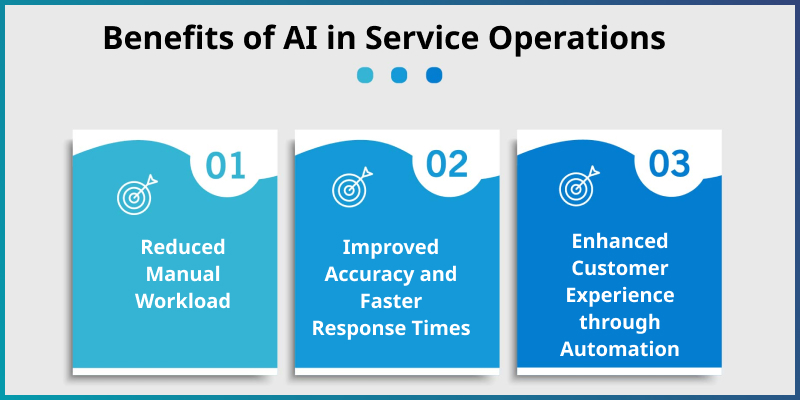
5. Benefits of AI in Service Operations
5.1. Reduced Manual Workload
AI handles repetitive data-entry and verification tasks that typically consume staff hours. Employees can then focus on higher-value activities like customer care and business growth.
5.2. Improved Accuracy and Faster Response Times
AI-powered systems minimize the risk of human errors and process data in real time. This ensures faster turnaround, higher data reliability, and better decision-making.
5.3. Enhanced Customer Experience through Automation
From instant check-ins to quick payment processing, automation directly translates to smoother customer journeys. AI helps businesses deliver experiences that feel personal, effortless, and consistent.
6. Steps to Adopt AI Image Recognition and OCR
6.1. Identifying Automation-ready Processes
Businesses should begin by mapping out manual workflows that are repetitive and data-heavy – such as form handling, image labeling, or document checks.
6.2. Selecting Scalable AI Solutions
Choosing the right partner or solution provider is crucial. Scalable AI models allow gradual deployment, starting small and expanding as needs evolve.
6.3. Measuring Performance and ROI
Continuous monitoring ensures the AI solution delivers measurable value. Key performance metrics may include accuracy rates, processing time, and overall cost reduction.
7. Conclusion
AI Image Recognition and AI OCR are redefining how the service industry operates — turning routine manual tasks into seamless automated workflows. By integrating visual intelligence into CRM, POS, and ERP systems, businesses can achieve operational excellence, enhance customer satisfaction, and maintain competitive advantage.
As automation continues to evolve, the service sector will increasingly rely on AI as the backbone of customer engagement and operational efficiency – marking the start of a new era in intelligent service delivery.