
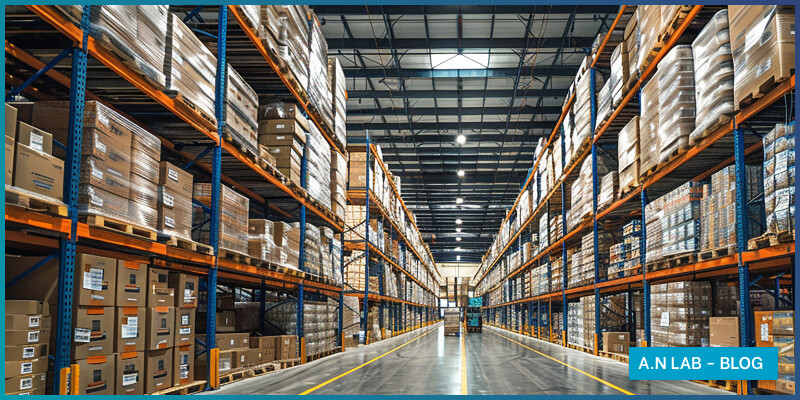
AI Image Recognition and AI OCR are revolutionizing logistics by turning warehouses into intelligent, data-driven environments. From automated sorting and inventory recognition to proof-of-delivery verification, these technologies accelerate operations, reduce human error, and enable faster, more accurate deliveries across global supply chains.
1. Introduction: How AI Is Reshaping Logistics
The logistics sector is under unprecedented pressure to deliver faster, cheaper, and more accurately than ever. E-commerce expansion, rising consumer expectations, and global supply chain complexities demand a new level of operational intelligence. Yet, many logistics workflows still depend on manual processes—handwritten forms, barcode scanning, and physical verification—causing costly delays and inconsistencies.
AI Image Recognition and AI OCR (Optical Character Recognition) technologies are redefining logistics efficiency. By enabling systems to “see” and “read,” they allow real-time parcel tracking, automated documentation, and error-free inventory management. With these capabilities, logistics companies can transform traditional warehouses into intelligent hubs where automation and data flow seamlessly.
1.1. Challenges in Traditional Logistics Operations
Even the most experienced logistics providers face challenges that hinder throughput and accuracy:
- Manual sorting and scanning: Human workers often read or scan each parcel individually, slowing operations during peak hours.
- Frequent data mismatches: Hand-entered shipment details and misread labels result in delivery errors.
- Limited visibility: Paper-based tracking provides no live updates for customers or operations teams.
- Quality issues: Damaged or mislabeled items are often undetected until the final stage.
These inefficiencies can lead to missed SLAs, lost trust, and escalating labor costs—especially when scaling globally.
1.2. Role of AI Image Recognition and AI OCR in Optimization
AI Image Recognition allows cameras to automatically detect, count, and assess packages, while AI OCR extracts key text information from shipping labels, invoices, and documents in multiple languages and formats.
Together, they create a digital eye across logistics operations—enhancing traceability, improving speed, and eliminating manual errors.
When integrated with warehouse management or ERP systems, these technologies provide end-to-end automation, from inbound sorting to outbound shipment tracking.
2. How AI Image Recognition and AI OCR Work in Logistics
2.1. Image-Based Object Detection and Parcel Tracking
AI-powered vision systems analyze images or video streams from cameras installed across conveyor belts, docks, and storage areas. Deep learning models trained on thousands of labeled examples can:
- Identify parcel types, shapes, and dimensions automatically.
- Recognize labels and detect anomalies such as torn or missing tags.
- Track each item as it moves through multiple processing stations.
By replacing barcode-only tracking, AI image-based tracking enables a non-contact, high-speed alternative ideal for large-scale operations.
2.2. AI OCR for Document, Invoice, and Label Automation
AI OCR goes far beyond traditional OCR by using deep neural networks to understand unstructured, noisy, or handwritten data.
In logistics, it is applied to:
- Shipping labels: Instantly reading addresses, ZIP codes, and barcodes even if partially damaged.
- Invoices and bills of lading: Extracting details like sender, receiver, and cost data into ERP systems.
- Customs declarations and delivery forms: Automating multilingual text recognition to support global logistics.
This dramatically reduces manual data entry time while ensuring standardized accuracy across regions and document types.
3. Core Applications in Logistics
3.1. Warehouse Inventory Recognition
In large fulfillment centers, visual AI can identify products and pallet IDs using only camera feeds—no manual scanning needed. Combined with real-time dashboards, managers can check stock levels, detect misplaced items, and forecast replenishment needs instantly.
AI systems can also detect visual cues like packaging color or shape to distinguish between similar SKUs, minimizing picking errors and improving order fulfillment speed.
3.2. Automated Parcel Sorting and Routing
Conventional sorting relies on human operators or mechanical systems that read printed codes. AI Image Recognition introduces a smart sorting layer capable of visually detecting destinations, parcel sizes, and conditions, and then directing them automatically to the right route.
For example, parcels labeled for express delivery can be visually detected and prioritized, while oversized or irregular packages can be routed through alternative conveyors – reducing jams and increasing throughput by up to 30%.
3.3. Cargo and Container Damage Detection
Visual inspection is one of the most labor-intensive processes in logistics. AI-powered damage detection models automatically identify dents, cracks, or leaks in packaging or containers using high-resolution images. When integrated with IoT sensors and cameras at checkpoints, the system flags damaged goods in real time—allowing for instant intervention and claim processing.
3.4. Shipment Verification and Proof-of-Delivery
Combining AI Image Recognition and AI OCR enables complete automation of shipment verification. Upon dispatch or delivery, the system captures an image of the parcel, recognizes its label, and verifies the delivery signature or timestamp. This digital proof ensures accountability and transparency across the entire logistics chain – reducing disputes and enhancing customer satisfaction.
4. Integration with Existing Systems
4.1. AI with WMS and ERP
The full potential of AI is realized when it integrates seamlessly with existing Warehouse Management Systems (WMS) and Enterprise Resource Planning (ERP) platforms.
When an AI camera detects a parcel or reads an invoice, the extracted data automatically updates the WMS, triggering next actions – such as dispatch creation, inventory updates, or payment reconciliation.
This real-time data synchronization eliminates manual input and enables accurate, instant decision-making.
4.2. Data Synchronization and Cloud Dashboards
Modern logistics networks span multiple locations and partners. Cloud-based AI dashboards allow central visibility, aggregating data from hundreds of cameras and recognition systems.
Managers can monitor:
- Throughput performance
- Error rates and alerts
- Equipment utilization
- Damage frequency by shipment type
These insights enable predictive planning – optimizing routes, scheduling maintenance, and forecasting warehouse capacity more accurately.
5. Benefits for Logistics Operations
5.1. Faster and More Accurate Deliveries
Automation reduces the time required for parcel recognition, routing, and documentation. AI-driven visual systems can process thousands of items per minute – achieving speed and accuracy levels that humans simply can’t match.
5.2. Improved Warehouse Utilization
AI insights into traffic flow and item placement help optimize warehouse layouts. By analyzing movement heatmaps, managers can reorganize shelves, adjust loading zones, and increase throughput without expanding physical space.
5.3. Reduced Human Error and Labor Costs
AI replaces repetitive manual tasks, reducing fatigue-related errors and labor costs. Staff can focus on quality control and strategic coordination rather than repetitive scanning or sorting.
5.4. Real-Time Visibility and Predictive Insights
AI continuously collects operational data, enabling predictive analytics – forecasting demand peaks, identifying process bottlenecks, and suggesting improvements proactively.
5.5. Enhanced Customer Experience
Real-time updates and proof-of-delivery images increase transparency, allowing customers to track their parcels with greater confidence and fewer disputes.
6. Implementation Roadmap
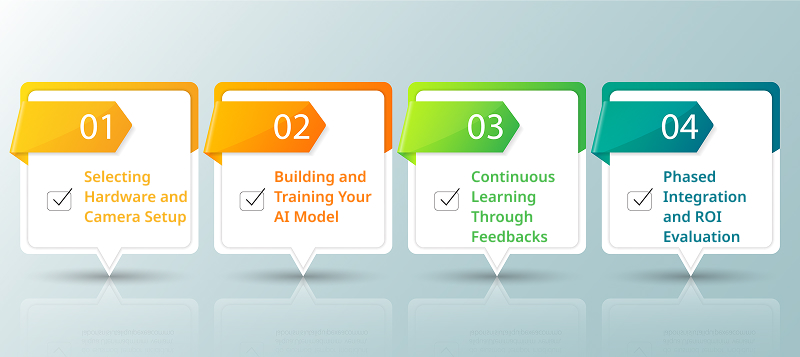
6.1. Selecting Hardware and Camera Setup
Choosing the right hardware is crucial. High-resolution cameras with proper lighting and angles ensure that AI models receive consistent, quality input. In some cases, 3D vision or thermal cameras can enhance recognition of irregular or reflective surfaces.
6.2. Building and Training Your AI Model
The model’s accuracy depends on training data. A diverse dataset covering different package sizes, materials, and label types helps ensure robust performance.
Many organizations begin with pre-trained AI models, then fine-tune them using their own operational images for better alignment with real-world conditions.
6.3. Continuous Learning Through Feedback Loops
Once deployed, AI systems should continuously learn from user feedback and new operational data. When the system misidentifies a parcel, corrections feed back into the model, refining its accuracy over time – turning logistics into a self-learning ecosystem.
6.4. Phased Integration and ROI Evaluation
Rather than full-scale rollout, leading logistics firms implement AI in stages—starting with one warehouse or use case, measuring ROI, and scaling gradually.
Early adopters often see ROI within 12–18 months, thanks to reduced labor costs, fewer errors, and faster deliveries.
7. Conclusion
AI Image Recognition and AI OCR are reshaping logistics into a smarter, data-driven ecosystem. By automating warehouse operations, improving delivery accuracy, and enhancing visibility across the supply chain, these technologies help logistics providers achieve faster performance, lower costs, and greater customer trust—paving the way toward fully autonomous logistics systems.